阿凡达
大学生暑期返乡社会实践活动启动_我的网站

A |
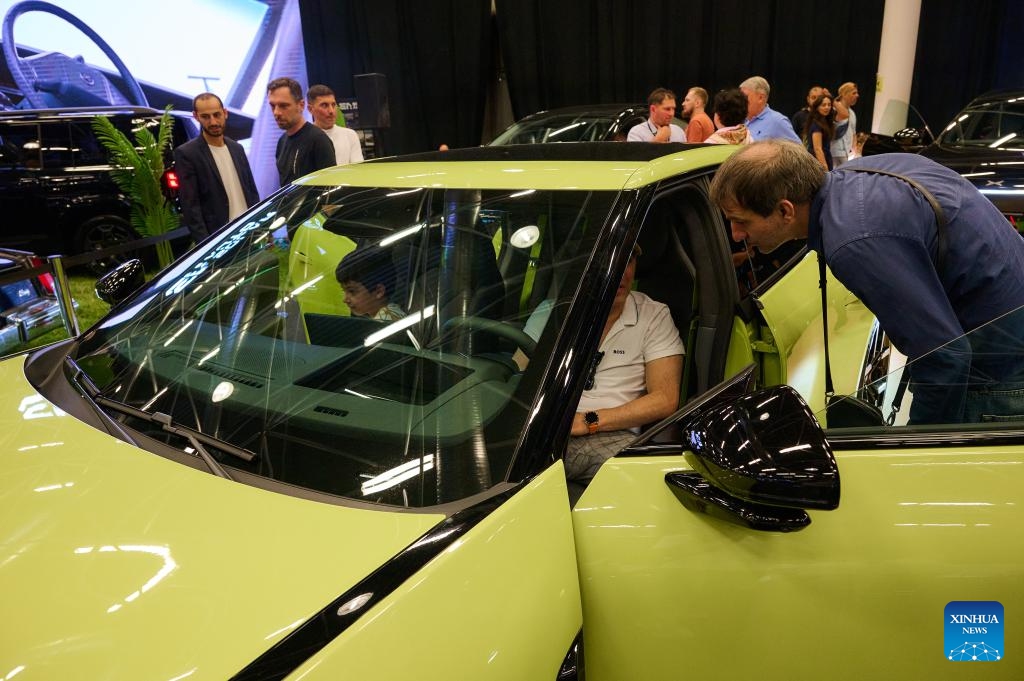
Visitors view an Xpeng electric vehicle at Expo Georgia in Tbilisi, Georgia, June 13, 2026. This year's expo was held here from Saturday to Sunday. Chinese automakers including BYD, XPeng, AVATR and JAC Motors have made appearances with their products at the expo. (Photo: Xinhua)
China-made electric vehicles (EVs) accounted for 14.2 percent of European market sales in the first five months of 2026 despite the EU's steep tariffs. The growth showed that trade‑protectionist barriers can only serve as short‑lived obstacles, as consumers' purchasing choice ultimately hinges on product competitiveness and China's EV strengths will support the automakers' long‑term growth, Chinese experts said.
The market share of electric cars sold by Chinese companies rose to 14.2 percent in European market in the first five months of this year, according to Schmidt Automotive Research. The 171,800 EVs sold there represented an increase in market share of five percentage points from one year earlier, the Guardian reported on Sunday.
The increase in European sales comes despite EU tariffs of up to 35.3 percent for EVs made by some Chinese manufacturers, on top of the standard 10-percent import duty. The UK is the largest European market for Chinese cars because London has declined to follow the EU's lead in imposing more levies. The UK accounted for a quarter of Chinese EV sales in Europe, according to the report.
Cui Dongshu, secretary-general of the China Passenger Car Association, told the Global Times on Monday that the surge showed trade protectionist policies have failed to contain Chinese automakers' overseas expansion.
Chinese EVs enjoy "a generational edge" over Europe's legacy carmakers. Their overall product strength remains the primary reason behind their popularity among European buyers, Cui said.
Meanwhile, fluctuating global oil prices have pushed up driving costs throughout Europe, fueling demand for affordable electric vehicles, a need well‑met by the affordable Chinese‑made models. Meanwhile, the gradual return of European electric‑vehicle purchase subsidies has lowered purchase barriers and lifted total EV sales, which has in turn worked to the advantage of Chinese exporters, Cui Dongshu said.
Chinese brands expanded their market share in Europe in the first half of 2026 driven by local subsidies and higher oil prices, Fitch Ratings said in a report sent to the Global Times.
The combined market share of leading Chinese brands in the EU, European Free Trade Association and UK rose to 11 percent in the first half of this year, up from 7 percent in the first half of 2025. The largest Chinese players, Geely Group (including Volvo Car) and SAIC Motor, expanded steadily despite the tariffs. The main drivers of market share gains were BYD, Chery and Leap Motor, according to Fitch Ratings.
Cui Dongshu noted that China's EV edge comes from its full‑fledged industrial ecosystem.
Officials from China's Ministry of Commerce told a press conference on July 28 that China boasts a complete, high‑efficiency EV industrial chain covering raw materials, auto parts, finished cars and production equipment, with industry clusters enabling rapid component supplies. China's huge market, the world's largest, has fueled 11 consecutive years of EV sales.
"Protectionism can only put up short‑term entry barriers. It cannot erase the solid strengths of Chinese EVs or stop Chinese brands from establishing a lasting foothold in Europe," Cui Dongshu said.
Yet, geopolitical risks remain as the EU reportedly considers expanding tariffs to restrict Chinese plug-in hybrid EVs.
German media Handelsblatt reported on June 19 that the EU is drawing up new measures to shield its single market more tightly against Chinese imports in the near future, citing senior EU officials and industry insiders. Specifically, the plan could contain countervailing duties to be levied on Chinese‑made plug‑in hybrids.
The rising market share of Chinese‑brand EVs amid EU tariffs has demonstrated that trade barriers cannot distort market choices. If the EU carries out its planned countervailing duties on Chinese plug‑in hybrids, the measure will yield only limited results, Cui Hongjian, a professor at the Academy of Regional and Global Governance at Beijing Foreign Studies University, told the Global Times on Monday.
Europe's problems stem from weak competitiveness and flawed energy policies. The EU ought to cast aside its confrontational mindset, remove unfair restrictions and pursue consultations and cooperation with China. Shifting industrial‑sector conflicts outward cannot remedy the weaknesses of its EV sector and will only damage the EU's reputation for destroying free trade, Cui Hongjian said.
。 本网讯 特约记者张振贺报道
为了引导和鼓励青年学子回到家乡参与实践活动,服务家乡的建设与发展,激发高校毕业生到基层就业创业的热情,7月15日,团建昌县委举办了2024年暑期大学生“返家乡”社会实践活动的启动仪式暨岗前培训动员部署会。县内各实践单位的代表及所有参与实践的大学生共计50余人参加会议。
会上,县税务局实习生王雨晴作为学生代表发表了表态发言。

B | 她承诺将珍惜这次实践机会,勇于接受挑战,不断提升自己,并以当代大学生应有的责任感,高质量地完成实践任务,全力以赴为家乡的发展贡献力量。
县妇联相关负责人表示,各个单位将结合自身的工作实际,为青年学子们提供一个“受到教育、增长知识和作出贡献”的广阔平台。希望同学们在实践岗位上能够勤奋实践,勇于探索,提高思想认识水平和服务社会的能力,通过实践获得成长并为家乡作贡献。
团县委相关负责人在动员讲话中对参加此次社会实践的大学生表示欢迎,并提出了几点希望:一是珍惜这次机会,积累经验,结合实践发挥专业特长;二是勇于创新,敢于担当,以实际行动服务家乡发展;三是严格遵守纪律,安全实践,充分展现当代青年的精神风貌;四是重视总结,提升自我,不断提高个人的综合素质和能力水平;五是心系家乡,热爱故土,用所学知识回报家乡、服务家乡。
会议结束后,团县委组织参与社会实践的大学生在县城周边开展了人居环境整治志愿服务活动。

C | 集中清理了县城周边道路和树林中的垃圾杂物,改善了人居环境卫生,以实际行动支持全县文明城市的创建。
据悉,团县委将继续发挥团组织引领青年、服务青年的职能,持续关心和支持青年学子的成长与发展,引导青年学生树立坚定的理想信念,激发他们投身基层、服务家乡的深厚情感,推动共青团实践育人工作的成效不断加强,吸引更多人才认识建昌、了解建昌、扎根建昌,为建昌县的高质量发展贡献青春力量。

D |
Current article:http://www.liangkuataosanxuanmiancen.sbs/2wafrh/43yueoe.html
Published on:07:00:41