爱情魔发师
China's inflation data show economy in doldrums despite a slight improvement in trade_我的网站

一 |
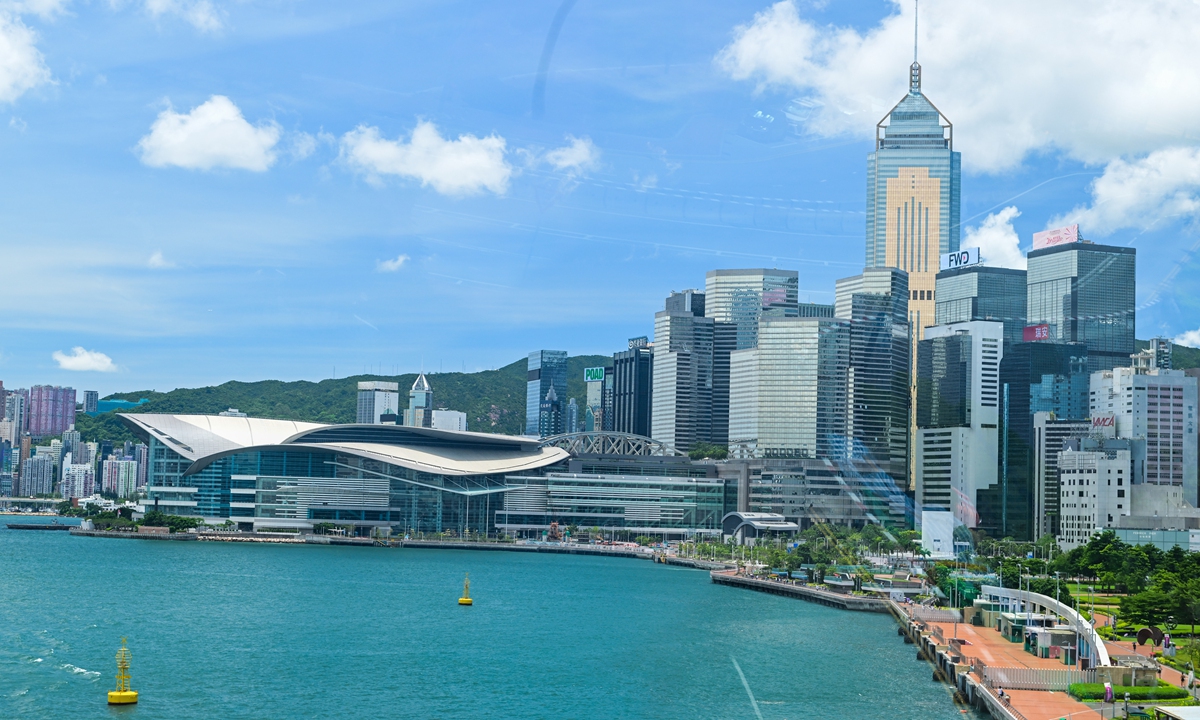
Bonnie Chan, CEO of the HKEX, made the remarks during an event held in Kuala Lumpur, Malaysia, the Hong Kong Economic Journal reported on Tuesday. She noted that in 2025, the city recorded 120 IPOs, raising $39.5 billion and ranking first among global fundraising platforms.
Global capital is refocusing on Asia, particularly China. In the past, capital was highly concentrated in the US market and in just one or two sectors. However, with changes in the political and macroeconomic landscapes, investors have come to recognize the need for risk diversification, and this trend is beneficial to both Malaysia and Hong Kong, said Chan.
Chan called on Malaysian companies to consider listing in Hong Kong to gain access to Chinese mainland investors. Malaysia supported 60 IPOs in 2025, the highest number in 20 years. If companies want to reach a broader investor base and deeper capital pools, Hong Kong is an ideal choice, she added.
Hu Qimu, a professor at the Maritime Silk Road Institute of Huaqiao University, told the Global Times on Wednesday that as a major international financial center, the HKEX's value in global resource allocation has become even more prominent, helping to attract capital from around the world.
During the event, Chan noted that market participants previously believed companies needed China-related business to list in Hong Kong, but this perception has changed in recent years.
She noted that last year, a Dubai-based baby diaper company with operations concentrated in Africa and Latin America listed in Hong Kong. A few months ago, Indonesian gold mining company Modecta completed its IPO in the city. Neither company generates any revenue in the Chinese mainland.
Hu noted that the HKEX boasts a broad international investor base, with information disclosure and corporate governance standards that are internationally recognized.
Moreover, it has become an important platform and intermediary connecting international capital with industries in the Chinese mainland. For foreign companies, listing in Hong Kong is equivalent to opening the door to mainland investors and the pool of yuan capital, Hu added.
Several international financial institutions have also expressed confidence in the Hong Kong capital market. PwC expects Hong Kong's full-year IPO fundraising to reach HK$380 billion ($48.43 billion), with growth momentum expected to continue into 2027, driven by listings of leading Chinese mainland companies and strong interest from international investors in high-growth new economy sectors.
Goldman Sachs said on July 23 that the post-listing performance of new shares in Hong Kong has been quite outstanding. New shares listed between 2025 and 2026 are expected to achieve a median return of about 20 percent and an average return of 60 percent within three months after listing, far exceeding previous years. Goldman Sachs said that market liquidity is ample, and it has predicted that the full-year fundraising in 2026 will reach $60 billion.
Hu noted that backed by the steady and positive trajectory of China's economy and the continuous upgrading of its industrial chains, investment and IPOs in Hong Kong will become more active.
。 HONG KONG -- China’s economy remains in the doldrums, data released Friday showed, with prices falling due to slack demand from consumers and businesses. Consumer prices remained flat in September compared with a year earlier, the National Bureau of Statistics said, while wholesale prices fell 2.5%. Exports and imports also fell last month as demand fell in overseas markets. The faltering recovery of the world’s second largest economy from the shocks of the COVID-19 pandemic is dragging on regional and global growth, though economists have said the worst might have passed. Trade ticked up slightly from the month before and manufacturing is showing signs of improvement. Earlier this week, the International Monetary Fund cut growth forecasts for China, predicting economic growth of 5% this year and 4.2% in 2024, down slightly from its forecasts in July.The IMF attributed its downward revision to weaker consumer confidence, subdued global demand and a crisis in the property sector that has made a big dent in business activity.China is due to report economic growth data on Oct. 18 and economists are forecasting the economy grew at a 4.4% annual pace in July-September, down from 6.3% in the previous quarter.Friday's data showed food prices dropped 3.2% in September, with the price of pork sliding 22% from a year earlier, a steeper decrease than the 17.9% drop in August.Core inflation, which excludes food and energy prices, rose 0.8% from a year earlier, the statistics bureau said, similar to a 0.8% rise in August.The recovery in domestic consumer demand has been much weaker than hoped for, and excess competition has provoked price wars in some sectors. “September's inflation data remind us that despite some firming in activity indicators recently, China's economic recovery remains challenged,” Robert Carnell of ING Economics said in a report. It forecast that consumer inflation will be at 0.5% for all of 2023 and only rise to 1% in 2024. China's producer price index — which measures prices factories charge wholesalers — has fallen for a full year, though last month it contracted more slowly than in August.Still, China’s manufacturing sector is showing some signs of improvement. A survey of factory managers showed activity returning to growth. The official purchasing managers’ index for September rose to 50.2 from 49.7 in August, the first time it had topped 50 in six months. A reading above 50 indicates an increase from the previous month.Car sales in China rose 4.7% in September from a year earlier, the China Passenger Car Association reported earlier this week. Passenger vehicle sales totaled 2.04 million units. The growth came ahead of the China’s long Mid-Autumn and National Day holidays in October. It's typically a bumper time for car dealers as people buy vehicles ahead of the week-long national holidays.And the real estate sector is muddling through the troubles brought on by a crackdown on heavy borrowing by developers that has hamstrung many home builders.“The housing market appears to have stabilized recently thanks to the latest round of property easing measures, which could drive a modest recovery in home sales and mortgage demand in the coming months,” Julian Evans-Pritchard of Capital Economics said in a commentary Friday. China’s global trade remained muted in September, with both exports and imports falling from the same time a year earlier.Imports and exports both slid 6.2% from a year earlier, although the economy declined at a slower rate compared to August after a slew of measures were released to support the economy.。
Current article:http://www.liangkuataosanxuanmiancen.sbs/43a5/20260826/59078.ppt
Published on:04:18:23


