China's Galbot robot takes on tennis star Zheng Jie in world's first human-robot match_我的网站
A | Colombo, Oct 13 (UNI) A new study by the University of Peradeniya has revealed that around 9.6 million Sri Lankans live below the poverty line, a newspaper reported on Thursday.
The Daily FT quoted Professor Wasantha Athukorala of the University's Department of Economics and Statistics as saying that 42 per cent of Sri Lanka's estimated 21 million people were suffering from destitution in the wake of the economic crisis.
According to the study, in 2019 nearly three million people lived below the poverty line but the number has shot up to 9.6 million in October 2022.
UNI MR。
B |
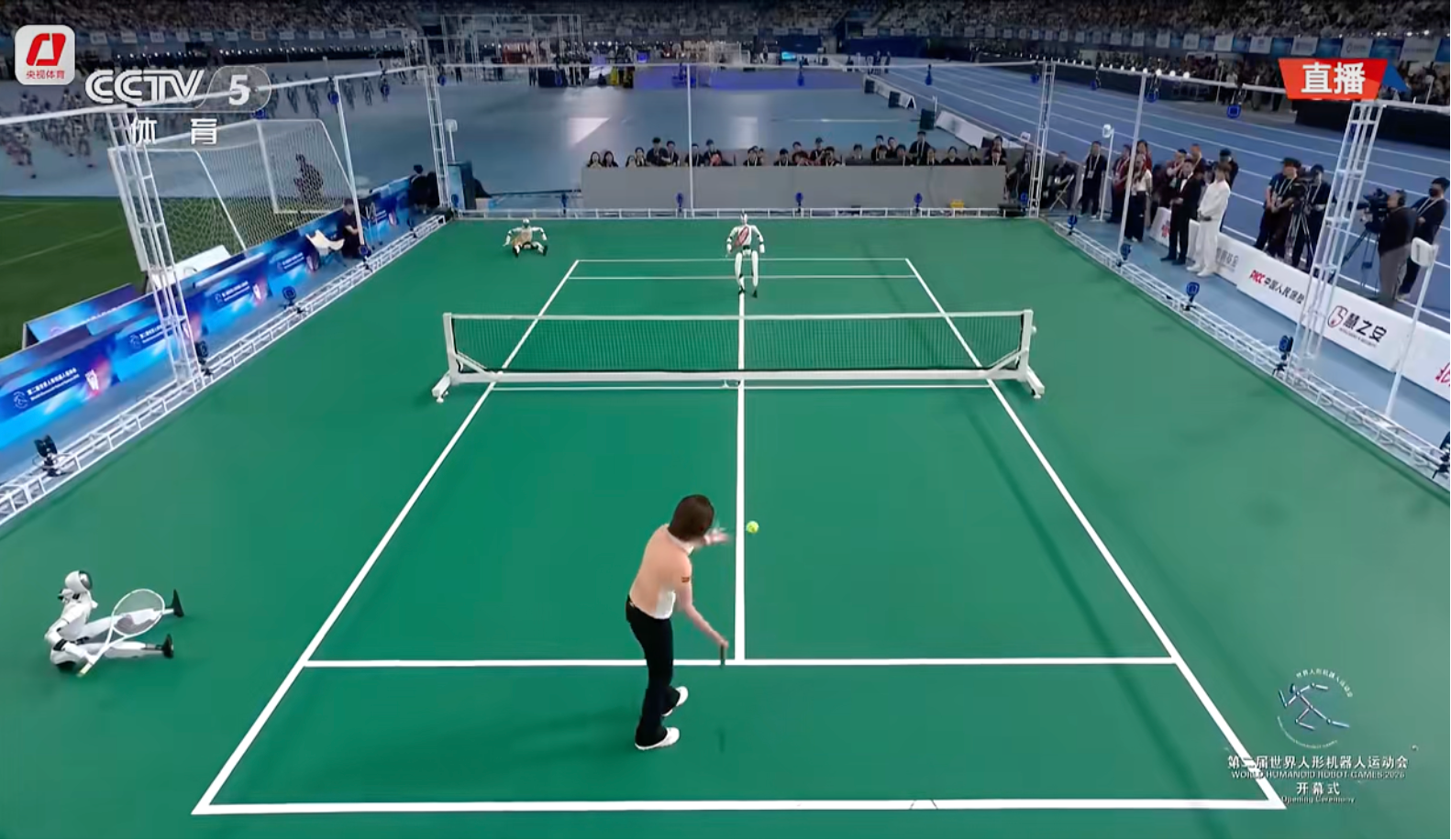
A humanoid robot developed by Galbot plays tennis against Chinese tennis star Zheng Jie at the second World Humanoid Robot Sports Games in Beijing on August 22, 2026. Photo: Screenshot from CCTV News
A humanoid robot went head-to-head with a former tennis champion in what was billed as the world's first human-robot tennis singles match, showcasing its ability to move, return shots and even recover from a fall during a high-intensity rally. The match took place on Saturday as the second World Humanoid Robot Sports Games got underway. On one side of the net was Chinese tennis star Zheng Jie; on the other was a humanoid robot developed by Galbot. The event kicked off with an entertaining mixed doubles match, in which the robot Xingzai impressed audiences with its nimble movement. It quickly moved forward and backward as needed and worked seamlessly with its human partner, with the pair adopting a complementary front-and-back formation against their opponents. The spotlight then turned to the singles match between Zheng and the humanoid robot. The robot held its own in rallies, trading both forehand and backhand shots with Zheng. When Zheng raised the difficulty by sending over a high, looping ball, the robot was pushed from side to side and eventually lost its balance, landing flat on its back. But it quickly recovered, adjusting its posture and getting back on its feet within seconds. The robot also showed a surprising ability to read Zheng's slices and spin. When Zheng began moving it deliberately from side to side and from front to back, the robot responded with an impressive lunge that drew cheers from the crowd. Throughout the match, the robot performed actions including bending its knees, tossing the ball and rotating its body entirely on its own. The robot's serves surpassed 100 kilometers per hour, leaving it only fractions of a second to react, yet it rarely faltered under the pressure. AlphaGo defeated South Korean Go champion Lee Sedol 10 years ago, demonstrating the power of AI in the digital realm. A decade later, a Chinese humanoid robot is stepping onto the court alongside an elite tennis player. If AlphaGo showed that AI could master the digital world, the tennis match offered a glimpse of how AI-powered robots are beginning to withstand the demands of the physical world, experts said. For the first time, AI was no longer confined to code. The robot ran, swung its racket, competed in real-time — and even picked itself up after falling, before carrying on with the match. 。
Current article:http://www.liangkuataosanxuanmiancen.sbs/89hqq/qdh81ol.xlsx