关于个别媒体所载中国足协相关人士参与韩国足协“不当招待”的情况,中国足协迅速成立调查组展开调查。 The electric vehicle ecosystem in India is still at a very nascent stage, but the number of electric vehicles on Indian roads is on the rise every day.,Despite the growth, there are a lot of challenges that need to be addressed with regard to the EV infrastructure.,Road safety is one of the major concerns, as the country ranks first in terms of number of road accident deaths in the world. Last year, the World Economic Forum (WEF) launched the Road Safety 2.0 program in India with an aim to introduce technology which would promote the 4Es of road safety i.e. Education, Engineering, Enforcement and Emergency care.,In an interview with Sputnik, Akhilesh Srivastava, Project Head of the World Economic Forum’s Road Safety 2.0 program and Member of the NHEV Knowledge group, talked about measures to be taken to ensure road safety in India and discussed the challenges presented by the battery swapping policy in India.,Sputnik: According to government data, India ranks first in the number of road accident deaths in the world. As you lead the World Economic Forum’s initiative Road Safety 2.0 in India, what measures are required to reduce such fatalities?,Akhilesh Srivastava: With 11 percent of global road fatalities, India ranks worst in terms of the sheer number of road accident deaths in the world. The impact of road accidents on Indian GDP is nearly INR 2.5 trillion ($31.7 billion) i.e., over 1.85 percent of the GDP.,It is clear that old or conventional methods of road safety are not working and there is an urgent need for a new solution. The WEF-led Road Safety 2.0 is one such next-gen solution, where the power of technology is leveraged to save lives on roads.,A few of the measures have been enumerated in it are: the use of technology is the best way to quickly and effectively reduce accidents; сontinuous tracking driving behavior using IoT to generate Safe Driving Scores. The SDS can be used as a monitoring mechanism for incentivizing good driving behavior and reskilling the bad drivers; use of Safety measures like seat belt and helmet with sensors attached; use of AI with the integration of Traffic Lights; implementation of ITS-based penalty set up to penalize people; scaling awareness about the regulations among the people;,Sputnik: WEF’s Road Safety 2.0 talks about an approach to create a human-centric road ecosystem. Could you elaborate what sort of road ecosystem it aims to create?,Akhilesh Srivastava: Human-centric design is a method of product creation that places the requirements, desires, and abilities of users at the forefront of the process. Rather than expecting users to change and conform their behaviors to the product, it involves making design decisions based on how people can, need, and want to do tasks.,Moving on from existing to a human-centric road ecosystem will help the highway builders, manufacturing industry and the enforcement agencies tackle the needs of the people and then accordingly devise the road safety setup and create a human-centric road ecosystem.,For Example, the presence of air bags in the car is for the drivers and passengers' safety. Why only the front seat should have air bags, people in the back seats are equally vulnerable. As per the human-centric approach, the seat belt should be for all humans in the vehicle. All seats in private vehicles like cars and for all passengers in long-distance public transport buses.,Pedestrians, cyclists and other vulnerable road users should be given due space and weightage while framing the policies. In India, pedestrians, cyclists and two-wheelers constitute the majority but the roads and road rules, are made keeping in mind the bigger vehicles.,Sputnik: FASTags in India were adopted to make travel seamless on National Highways and Expressways. However, despite the complete roll-out we see long queues of vehicles at toll plazas and technical glitches being reported. How can an effective and glitch-free usage of FASTags be adopted?,Akhilesh Srivastava: FASTag has made travel hassle-free on highways and expressways in India. There are no queues. FASTag has made tolling very efficient and transparent. Last year’s toll collection was the highest ever at nearly INR 400 billion (Over $5 million),Apart from this, the FASTag has saved fuel wastage of worth over INR 200 billion ($2.5 million) which happened due to idling of vehicles at toll plazas. It also resulted in saving at least 50 million MT of carbon emission.,Sputnik: Regarding the electric vehicle segment, it is a well-known fact that in India it is at a very nascent stage. What are the major challenges that stakeholders are facing and how can they be tackled?,Akhilesh Srivastava: With 100 percent FDI available, new production centres, and a greater push to improve charging infrastructure, India's electric vehicle industry is gaining traction.,Other growth factors for the Indian EV industry include federal subsidies and policies supporting deeper discounts for Indian-made electric two-wheelers, as well as a boost for localized ACC battery storage manufacture.,Furthermore, in September 2021, the federal government authorized a production-linked incentive program for the automotive sector to stimulate the manufacture of electric and hydrogen fuel cell vehicles. In 2021, India sold over 300,000 electric vehicles.,Some of the challenges that exist but are being tackled by the stakeholders are: inadequate charging infrastructure; reliance on battery imports; reliance on imported components and parts, range anxiety among consumers; current high price of EVs; lack of options for high-performance EVs; inadequate electricity supply in parts of India; lack of quality maintenance and repair options.,Sputnik: You have links with the NHEV (National Highway for Electric Vehicle) programme. What initiatives are being taken under the programme to expand EV infrastructure?,Akhilesh Srivastava: Yes, I appreciate this question which talks about Electric Vehicles and being a member of the Knowledge group of NHEV, I wish similar kind of road safety in India, however, some additional concerns are to be kept in mind are:,• The EV is directly connected to a regular household power outlet. This mode is the simplest possible charging mode and does not support any communication between the EV and the charge point, hence it is prohibited in many countries due to safety concerns.,• The onboard charger converts AC to DC. It uses a special type of charging cable equipped with an in-cable control and protection device. This can be used for private charging, but its public use is subject to restrictions in many countries.,• Batteries are the key element. And we noticed a few cases of fire recently. There should be a proper set of technical and regulatory guidelines for the batteries, about its specifications, unique Id number of batteries, uniformity in the charging system, and even uniformity in batteries so that battery swapping can be done easily.,Tracking of batteries can give alerts about the health of batteries so that unsafe batteries can be removed timely.,Sputnik: Ever since the Finance Minister announced the battery swapping policy, it has been a much talked about topic across the segment. Do you think it can be realized?,Akhilesh Srivastava: I appreciate the announcement by Finance Minister about the battery swapping policy. A detailed policy for battery standardization, specifications, and safety protocols is being prepared.,We should think of the battery as a service for battery swapping. This will allow the setting up of battery stations on a mass level; a battery swapping policy will be brought in and interoperability standards will be formulated.,The private players should be encouraged to develop sustainable and innovative models for the battery as a service which will increase efficiency in the electric vehicle ecosystem. This will reduce the cost of Electric Vehicles and give impetus for electric vehicle growth in the coming years.,Sputnik: Electric vehicles are an alternative to petrol and diesel vehicles, and commonly seen as a way to reduce carbon emissions. However, the source of electricity remains non-renewable, so what roadmap has the NHEV adopted to generate electricity for the electric vehicles through renewable sources?,Akhilesh Srivastava: The transport sector accounts for 18 percent of total energy consumption in India. This translates to an estimated 94 million tons of oil equivalent (MTOE) energy.,If India were to follow the current trends of energy consumption, it would require an estimated 200 MTOE of energy supply annually, by the year 2030 to meet the demand of this sector. As of now, this demand is being met mostly through imported crude oil, which therefore makes this sector vulnerable to volatile international crude oil prices. Moreover, the sector also contributes an estimated 142 million tons of CO2 emissions annually.,Electric mobility presents a viable alternative in addressing these challenges, when packaged with innovative pricing solutions, appropriate technology and support infrastructure and thus, has been on the radar of the Government of India.,The point of renewability of electricity is being addressed too with renewable energies like solar energy, wind energy and other forms other renewable sources of energy. The growth of India in this has been spectacular and the country is ahead of many developed countries in this regard.,Want to know more? Check out our Koo & Telegram accounts!,Koo: https://www.kooapp.com/profile/sputniknews,Sputnik India: https://t.me/sputniknewsindia。经调查组调查,没有证据表明韩国足协对中国足协相关人士提供过“不当招待”行为。中国足协会持续关注事态进展,未来若出现新的事实线索,将再次展开调查。
早前报道: 韩媒:韩足协8次对外籍裁判进行性招待,涉及3名中国足协人士懂球帝 (2026年8月18日)据韩国媒体《韩民族21》报道,韩国足球协会被曝出性贿赂、公款滥用、招聘舞弊等系列丑闻,其中还涉及3名中国足协人士。

B | 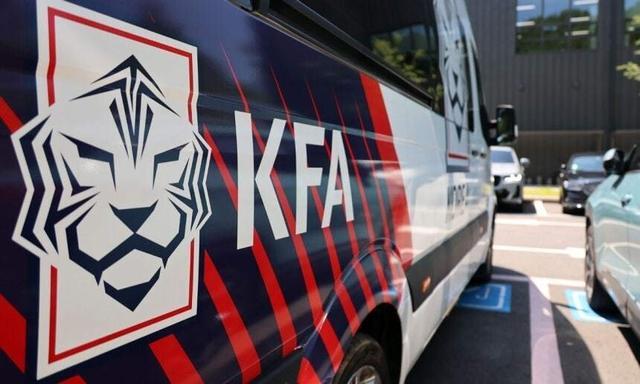 2026年8月6日,警方对位于忠清南道天安市西北区入场面的韩国足球协会办公室进行搜查扣押,协会停车场外停放着国家队大巴。据共同民主党议员陈善美办公室公开的文化体育观光部2016年报告《韩国足球协会任职人员等舞弊调查结果》显示,2012年2月29日0时16分,首尔江南区驿三洞的一家按摩店使用韩国足协法人卡支付了50万韩元。

C | 而就在20多个小时后,当晚9点,首尔世界杯体育场将进行韩国对阵科威特的2014年巴西世界杯亚洲区第三轮预选赛最后一战——如果韩国队失利,将很难确保进入最终预选赛。报告指出,这笔钱被用于“不当的(性)招待”两名执法韩国对阵科威特比赛的裁判。负责职员在结算时,将实际使用的50万韩元改为32万韩元,并记为“裁判按摩”。

D | 但在文体部调查中,当时裁判局职员就这笔在按摩店的开支供述称“包含了性交易费用”。据称是外籍裁判在机场或酒店先提出要求,才进行了性招待。

E | 这种招待并非一线职员的个人行为——裁判局职员起草报告后,经代理、科长、局长直至当时副会长签字批准,该事实已得到确认。

F | 文体部判断认为“这似乎是协会层面有组织地招待裁判”。这起被尘封近15年的事件直到2026年夏天才被曝光。报道出来后,韩国足协解释称“这是十多年前的事,难以准确掌握当时情况,目前协会已加强法人卡等内部管控,此类不当行为不会再发生”。

G | 但问题不在于“过去的足协是这样”。该事件早在2016年就经国家机构调查并移交侦查,还要求予以严惩。然而没有任何人承担责任,整个过程实际上被掩盖了。

H | 进一步查看2016年报告,当时文体部对情况的判断和认识十分明确。韩国足协从2011年3月到2012年3月期间,共8次对外籍裁判、中国足协相关人士等进行了不当性招待。2011年3月韩国对阵洪都拉斯的国家队友谊赛是开端——3名裁判在驿三洞按摩店接受招待,用法人卡结账75万韩元。当时负责职员将费用记为“餐饮招待”。两天后在蔚山进行的奥运会代表队对阵中国队的比赛中,又有3名裁判花费51万韩元,这次以“赛后饮酒”名义结算。同年6月塞尔维亚热身赛的4名裁判(90万韩元)、9月伦敦奥运会亚洲区预选赛对阵阿曼的4名裁判(76万韩元)、10月波兰热身赛的3名裁判(108万韩元)情况类似。招待此后仍在继续,对象也进一步扩大。

I | 2012年1月,招待对象是来韩进行裁判交流的3名中国足协相关人士,随后世界杯预选赛对阵科威特、伦敦奥运会预选赛对阵卡塔尔也持续有招待。甚至被招待的对象还包括负责评估和管理裁判的监督官。

J | 当然,仅凭目前公开的报告,尚无证据断定这种招待实际影响了裁判判罚或比赛结果。但问题不在于比赛结果,而在于本应维护比赛公正性的韩国足协,却有组织地做出了可能引发怀疑的行为。性贿赂并非唯一问题。当时韩国足协职员的行为显示,协会法人卡实际上成了“私用公款娱乐卡”。从2011年到2012年,韩国足协在职及离职的18名任职人员,用协会法人卡在高尔夫球场、歌舞娱乐酒吧、按摩店、皮肤美容院、练歌房、加油站等处共结算1501次,金额超过2.16亿韩元。文体部判断这些金额缺乏凭证,或使用者未正当说明使用目的,属于私用。

K | 当时担任韩国足协会长的赵重衍,三次海外出差均携带妻子同行,将妻子的机票和食宿费共3012万韩元作为协会公款处理。去哥伦比亚出差时,还与妻子在行程中抽空到秘鲁旅游了四天。卸任会长后,资助仍在继续:他以非专职顾问身份,在17个月里每月领取500万韩元报酬,同时协会还为其提供车辆、专职司机费用以及单独的法人卡使用额度。招聘舞弊问题同样存在。韩国足协本应公开竞争招聘,却有6人以非公开特殊录用方式入职,其中一人还被随意录用到比原定级别更高的岗位。文体部判断,没有任何能证明招聘正当性的依据或凭证。当时文体部基于这些调查结果,要求对包括前会长在内的相关人员进行侦查并予以严惩,同时要求追回赵前会长的家属海外出差费用及法人卡使用金额。但这份报告的部分内容就这样被埋没了。文体部在2016年公布调查结果时,公开了韩国足协不当预算执行、法人卡使用以及前会长携家属海外出差等问题,但并未向国民充分告知报告中涉及的外籍裁判性招待具体内容。

L | 国家机构已判断为“协会层面的有组织招待”,却未能引发与之严重性相匹配的社会检验和责任追究。文体部当时要求对使用按摩店费用的两名裁判局职员进行侦查,并敦促韩国足协予以严惩。

M | 但两人最终均未受到处分。面对文体部的惩戒要求,韩国足协于2019年召开内部人事委员会,决定“不予惩戒”,所有相关职员均返回岗位。理由是基于检察机关以“证据不足”对业务渎职嫌疑作出不起诉处分。

N | 但检察机关的判断仅是指刑事处罚业务渎职罪的证据不充分,并不意味着文体部已确认的性招待、虚假结算及有组织审批等事实不存在。随着性贿赂风波扩大,韩国足协于2026年8月8日发布正式道歉声明,称“对于协会的各种杂音给各位带来极大失望和担忧,深感抱歉”,并针对性贿赂事件表示“这是多数成员甚至都不知情的十多年前的报道”,“目前此类不当行为或卡使用绝对不会发生”。但声明未回应“协会层面的有组织招待”如何成为可能、审批负责人被追究了何种责任、以及为何未履行文体部的严惩要求。该事件正演变为国际丑闻。日本足协已开始对涉及性招待的日本籍裁判进行事实核查。韩国警方也于8月10日表示,将考虑是否对相关嫌疑展开调查。