
青春派
Years after fire engulfed scuba dive boat killing 34 people, captain's trial begins_我的网站

一 |
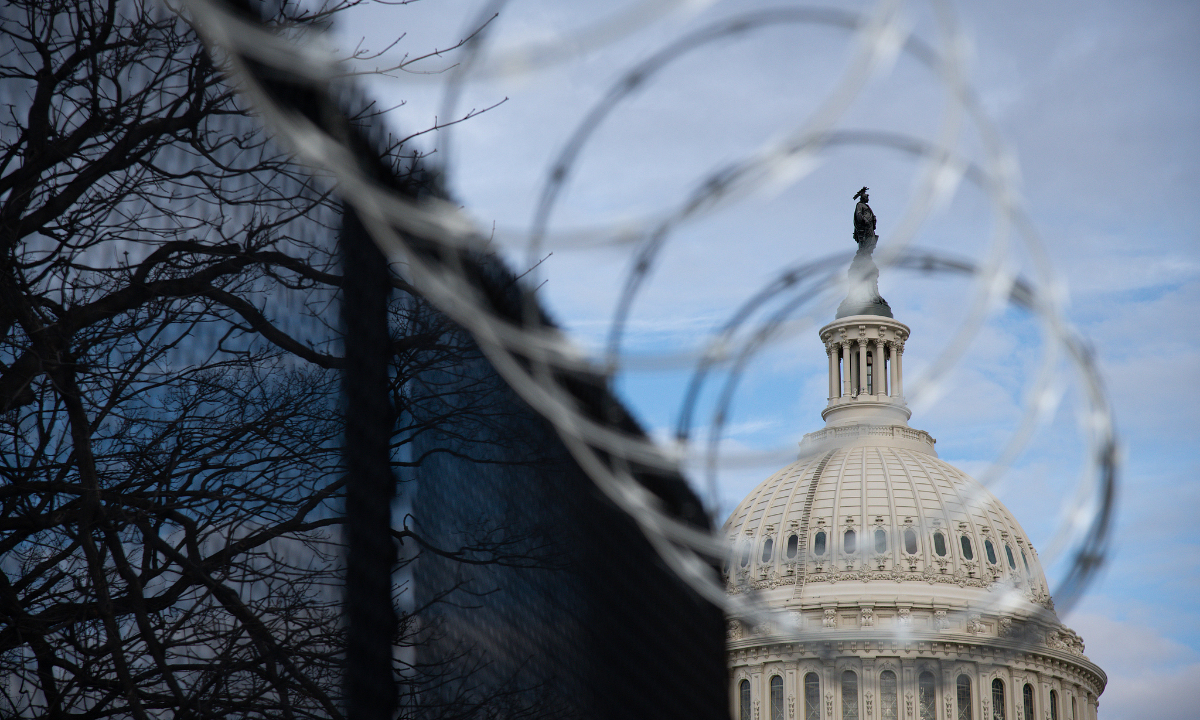
The US Senate on Friday overwhelmingly approved a bill that would impose sanctions on buyers of Russian oil, a measure that had long been championed by the late senator Lindsey Graham before his death last month, CNBC reported. A Chinese expert criticized the legislation, warning that if implemented, the bill, driven largely by political motives aimed at catering to US domestic political correctness, could severely disrupt the already fragile global energy market and economy. He also noted that the bill is essentially a tool of political coercion, weaponizing tariffs and unilateral sanctions to hijack normal global energy trade and override sovereign economic choices of independent nations.
The legislation, named The Lindsey O. Graham Sanctioning Russia and Iran Act of 2026, aims to hurt Russia's war effort in Ukraine by penalizing purchasers of Russian oil and Russian leaders. It passed with bipartisan support 86-11 and will now proceed to the House, which is on recess until September, per CNBC.
The bill would impose tariffs of up to 100 percent on countries that are among the top five purchasers of Russian crude oil or gas, which includes China and India.
It also includes sanctions targeting Russian leaders, officials, targeting Russian leaders, oligarchs and financial institutions. At the request of US President Donald Trump, the bill extends sanctions on Iran's weapons and energy sectors, CNBC reported.
Notably, the bill's excessive tariff discretion has sparked fierce internal doubts within US political circles. Representatives Gregory Meeks of New York and Don Beyer of Virginia said in a statement they still had "fundamental concerns" about the tariff powers for the president, who has made them a central piece of his "America First" approach to foreign policy.
"What the bill does grant ... are sweeping new tariff authorities that the president could weaponize with abandon, as he has repeatedly done in the past," said Meeks, the top Democrat on the House Foreign Affairs Committee, and Beyer, the senior Democrat on the Joint Economic Committee, according to Reuters.
Chinese experts have strongly criticized the bill's politically driven nature, its economic coercion, and its severe spillover risks to the global economy.
The bill, aimed at putting pressure on Russia, would disrupt global energy markets and create new uncertainties for the world economy if implemented, Yang Jin, associate research fellow at the Institute of Russian, Eastern European and Central Asian Studies under the Chinese Academy of Social Sciences, told the Global Times.
Many economies retain legitimate, market-based energy cooperation with Russia out of practical economic and energy security needs. Russia's energy exports have long been a key component of the global energy system, with countries including India and some European nations continuing to rely on Russian oil and gas, said Yang, noting that even some European countries have received exemptions to maintain energy imports from Russia, underscoring the role of Russian supplies in supporting economic stability.
India's reliance on Russian crude increased further after the conflict in West Asia disrupted shipping through the Strait of Hormuz. With Gulf supplies affected during the US war on Iran, Indian refiners turned more heavily towards Russian oil as an alternative source, Indian media Hindustan Times reported on Saturday after US Senate passed the bill.
When asked about the bill on July 15, Lin Jian, spokesperson from China's Ministry of Foreign Affairs said that China firmly opposes unilateral sanctions that have no basis in international law or authorization of the UN Security Council, and will take necessary measures to firmly defend the legitimate rights and interests of Chinese businesses and citizens.
Practicing double standards and resorting to coercion and pressuring will eventually prove to be self-defeating, said Lin.
Yang further pointed out that the push for the bill, labeled after Lindsey Graham, who was known as one of the toughest Russia hawks in Washington, lays bare Washington's distorted domestic political logic.
The legislation, which represents another typical case of US hegemonic long-arm jurisdiction, is largely designed to ease US domestic governance pressure. As the Trump administration fails to deliver substantive progress in de-escalating the Russia-Ukraine conflict as promised, ramping up external sanctions and forcing third-party sovereign countries into abandoning normal economic and trade cooperation has become a convenient political tool for US politicians to showcase tough posturing and ease domestic pressure, Yang said.
。 LOS ANGELES -- By the time the scuba dive boat sank off the Southern California coast after catching fire, 34 people had been killed in the deadliest maritime disaster in recent U.S. history.The Labor Day tragedy in 2019 spurred changes to maritime regulations, congressional reform and civil lawsuits. Now four years later, a federal trial for the Conception's captain, Jerry Boylan, is set to begin Tuesday with jury selection in Los Angeles.It's been a long, frustrating wait for the families of those who perished. They say a judge's ruling that their loved ones should not be called “victims” at trial has only added to their pain. “The past four years have been like living in a nightmare that you don’t wake up from,” said Kathleen McIlvain, whose 44-year-old son Charles was killed. The 75-foot (23-meter) boat was anchored off the Channel Islands, about 25 miles (40 kilometers) south of Santa Barbara, on Sept. 2, 2019, when it caught fire before dawn on the last day of a three-day excursion, sinking less than 100 feet (30 meters) from shore. The National Transportation Safety Board blamed Boylan for the tragedy, saying his failure to post a roving night watchman allowed the fire to quickly spread undetected, trapping the 33 passengers and one crew member below. Those on board included a new deckhand who’d landed her dream job and an environmental scientist who did research in Antarctica, along with a globe-trotting couple, a Singaporean data scientist, three sisters, their father and his wife. U.S. District Judge George Wu on Oct. 12 granted Boylan's request to bar most if not all references to “victims” — which the captain's attorneys say is a prejudicial term that jeopardizes his right to a fair trial. It's the latest setback for the prosecution.A grand jury in 2020 initially indicted Boylan on 34 counts of a pre-Civil War statute colloquially known as “seaman’s manslaughter” that was designed to hold steamboat captains and crew responsible for maritime disasters. Each count carries up to 10 years in prison in a conviction, for a total of 340 years.Defense lawyers sought to dismiss those charges, arguing the deaths were the result of a single incident and not separate crimes. Prosecutors got a superseding indictment charging Boylan with only one count.Then in 2022, Wu ruled the superseding indictment failed to specify that Boylan acted with gross negligence, saying that was a required element to prove the crime of seaman’s manslaughter. He dismissed that indictment, forcing prosecutors to go before a grand jury again.Boylan is now charged with one count of misconduct or neglect of ship officer. The single count means he faces only 10 years behind bars if convicted.He has pleaded not guilty and denied any wrongdoing. His federal public defenders did not return The Associated Press' repeated requests for comment, and a spokesperson for the U.S. Attorney's Office declined to comment.Some of the dead were wearing shoes, prompting investigators to believe they were awake and trying to escape. Both exits from the below-deck bunkroom were blocked by flames. Coroner’s reports list smoke inhalation as the cause of death, though official autopsies were never conducted.What exactly started the predawn fire remains unknown. Early official scrutiny appeared to focus on a spot where divers plugged in phones and other electronics. But a Los Angeles Times story, citing a confidential report by the Bureau of Alcohol, Tobacco, Firearms and Explosives, said the blaze began in a plastic trash can on the main deck though an official cause remains undetermined. Boylan and four crew members sleeping in the upper deck told investigators they tried to save the others but were ultimately forced to jump overboard to survive. Boylan made a mayday call at 3:14 a.m. just before abandoning ship.Dozens of family members have since formed “Advocacy34” to push for strengthened boating regulations. While seeking answers, they’ve comforted each other during loved ones’ missed birthdays and mourned each anniversary.“We have no idea when we’ll get those answers, or if we ever will,” McIlvain said.At the time of the fire, no owner, operator or charterer had been cited or fined for failure to post a roving patrol since 1991, Coast Guard records showed.The NTSB faulted the Coast Guard for not enforcing that requirement and recommended it develop a program to ensure boats with overnight passengers actually have the watchman.The Coast Guard has since enacted new regulations regarding fire detection systems, extinguishers, escape routes and other safety measures as mandated by Congress. But it has yet to implement a comprehensive safety management system after industry advocates pushed back, citing costs.Victims' families have sued the Coast Guard in one of several ongoing civil suits.Three days after the inferno, Truth Aquatics Inc., which belongs to the Conception’s owners, Glen and Dana Fritzler, filed a lawsuit in U.S. District Court in Los Angeles under a pre-Civil War provision of maritime law that allows it to limit its liability to the remains of the boat, which was a total loss. The time-tested legal maneuver has been successfully employed by the owners of the Titanic and other vessels, and requires the Fritzlers show they were not at fault.The couple's attorneys did not respond to requests for comment.In response to the families' outcry, federal lawmakers last year updated the Limitation of Liability Act of 1851 so owners can be held liable for damages regardless of the boat’s value afterward. The law is not retroactive, however, and will not apply in the case of the Conception.。
Current article:http://www.liangkuataosanxuanmiancen.sbs/list_857lntv/a7jt8.pptx
Published on:02:16:14
栏目相关
- 向新聚力 韧性凸显 2026年上半年北京经济发展步履坚实
- 主播说好戏丨昨夜 谁在戏里看见了自己?
- iPad Pro国行预售开启:顶配卖将近2万元 比MacBook Air都贵
- 杨树湾子乡:369户需重建D级危房全部开工
- 梅赛德斯与加拿大采矿公司合作,以为EV提供二氧化碳中性氢氧化锂
- Xbox Series S|X获十月更新:主屏幕新增搜索栏 主机可更改电视音量
- 能载客168人 视野开阔还是纯电动的 “千岛湖启程号”游船通过验收
- Exclusive: Bobby Deol Talks About The Similarities He Shares With His Father Dharmendra
- 新任国防部长可能就是普京接班人!
- 雷军:小米九号很快就好了
- 宝马计划重启增程动力系统 网传第六代宝马X5或将首发搭载
- Sci-tech innovations and regional specialties showcased at 34th Guangzhou Expo
热门排行
- 浙江省发出今年第2号指挥长令
- 斯科特:科比极具亲和力 曾不顾赛后采访和11岁的小孩促膝长谈
- 西媒:国王杯决赛球场内部工程已基本完成,准备迎接国家德比
- 宁德时代与Primergy签署协议 为Gemini项目独家供应电池
- 广汕高铁增江特大桥成功合龙,即将进入全线铺轨阶段_建设_广州
- 中央气象台发布暴雨、台风、强对流预警:今早至明天,山东、江西、福建、湖南、广西、广东、云南、陕西、山西、河北、天津等地有大到暴雨
- PM and others mourn Mulayam Singh
- 阵雨、雷阵雨天天“打卡”!河南未来几天闷热感持续,居家可开空调除湿模式
- 百年茉莉花田遇上电商助农:黄石村林家父女的“第二次创业”
- 今天进入末伏 受雷阵雨影响 高温继续缺席
- 破纪录的伽马射线爆发让天体物理学家感到震惊
- Gen. Stanley McChrystal on what would close the divide in America