
火星文
China turns ancient TCM wisdom into high-tech personalized skincare_我的网站

A |
[ 新车首发] 北京时间6月11日,宝马发布了全新宝马iX3(参数|询价)的试装车。 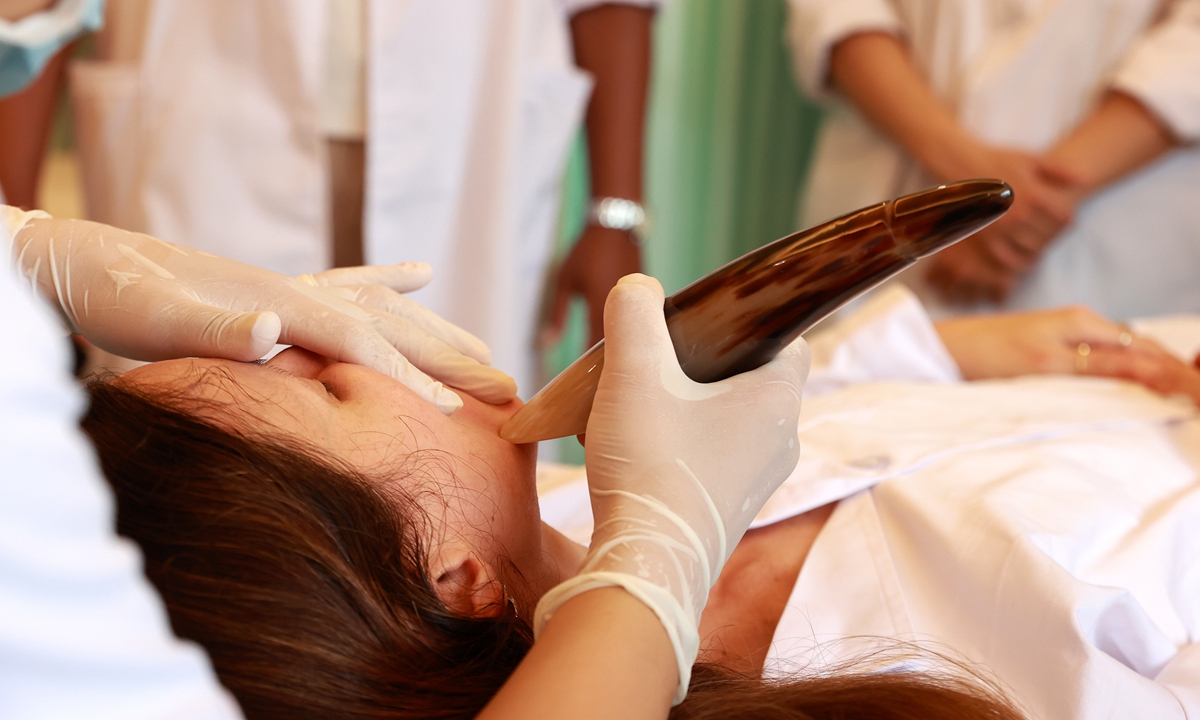
Starting in August, eight provincial-level regions will join the second phase of the program, bringing the total number of participating provinces and regions to 23, according to the National Medical Products Administration.
Under the pilot program, cosmetic registrants and authorized domestic entities can provide personalized services by mixing or dispensing two or more cosmetics in small batches based on consumers' individual needs.
At the Beijing Tong Ren Tang personalized cosmetic service skincare experience center, for example, a skin analysis can assess more than 30 indicators and generate a personalized skincare plan, based on which consumers can order tailored products, according to the People's Daily.
Twenty-four-year-old Beijing resident Zhao Xiyao was among the early consumers to experience the service. She told the Global Times on Sunday that when buying skincare products in the past, she relied largely on the brand's advertising or online "ingredient reviews." Even when she knew what problems her skin tended to develop, it was still difficult to determine which products were truly right for her.
"Compared with simply buying a bottle of skincare product, I care more about the skin analysis that comes before the personalized service," she told the Global Times. "At least it first tells you what condition your skin is in, and then selects products based on that condition, rather than having everyone use the same set of products."
For Zhao, the appeal of the experience goes beyond the novelty of the word "personalized."
"If it's just about changing the packaging or putting my name on it, I don't think that means much. What really makes it valuable to me is whether it can actually make a difference based on my individual situation," she said.
The idea of tailoring skincare to individual needs, however, is not entirely new. It echoes the traditional Chinese medicine (TCM) principle of taking individual differences into account.
Yi Lan, a TCM physician practicing in South China's Guangdong Province, told the Global Times that people with the same skin concerns may need different approaches because of differences in their constitutions, lifestyles and living environments.
However, she noted that TCM diagnosis and modern personalized cosmetics are not the same: The former involves a comprehensive assessment of an individual's overall condition, while the latter mainly matches products to skin conditions and consumer needs.
For personalized skincare, the key lies in whether this matching process can deliver meaningful results.
"If personalized services are to become a lasting consumer service, the key will be 'precision,'" Yi said. "The test results must be reliable; otherwise, the plan that follows has little meaning."
According to Yi, if ordinary products are simply combined in a different way without being able to explain why that combination is suitable for a particular person, then "personalization" can easily become a marketing concept.
At its core, personalized skincare is less about making a product more complicated than about making the choice more relevant to the person using it. Technology is giving the traditional idea of taking individual differences into account a new expression in the consumer market. However, the real test is whether it can translate into products that are genuinely better suited to the individual.
。全新iX3作为宝马Neue Klasse平台上的首款车型,其内部代号为NA5,将会采用与此前发布的Vision Neue Klasse X概念车相同的设计风格。据悉,宝马iX3量产版将在9月份开幕的慕尼黑车展正式全球首发;而全新宝马iX3的国产版本,代号NA6,将会加长车身轴距,并于2026年在宝马中国沈阳生产基地的第三个整车工厂——里达工厂正式下线。全新宝马iX3试装车采用的全新设计语言,基本就是量产版本的造型设计,封闭式双肾格栅内部集成毫米波雷达与摄像头,格栅边缘以发光饰条勾勒,配合扁平化“天使眼”大灯,形成极具辨识度的前脸。在新世代的设计语言下,展现出未来感与功能性的融合巧思。车身侧面来看,溜背式造型与上扬的腰线营造出俯冲姿态,隐藏式门把手与低风阻轮圈共同优化空气动力学表现,实现该车型风阻系数达到0.25。新车通过车身曲面变化与C柱的“BMW”发光标识,在电动化时代展现了宝马的美学基因。车尾灯光源采用3D立体结构,内部主光源呈现“X”形图案,呼应车型标识。
。Starting in August, eight provincial-level regions will join the second phase of the program, bringing the total number of participating provinces and regions to 23, according to the National Medical Products Administration.
Under the pilot program, cosmetic registrants and authorized domestic entities can provide personalized services by mixing or dispensing two or more cosmetics in small batches based on consumers' individual needs.
At the Beijing Tong Ren Tang personalized cosmetic service skincare experience center, for example, a skin analysis can assess more than 30 indicators and generate a personalized skincare plan, based on which consumers can order tailored products, according to the People's Daily.
Twenty-four-year-old Beijing resident Zhao Xiyao was among the early consumers to experience the service. She told the Global Times on Sunday that when buying skincare products in the past, she relied largely on the brand's advertising or online "ingredient reviews." Even when she knew what problems her skin tended to develop, it was still difficult to determine which products were truly right for her.
"Compared with simply buying a bottle of skincare product, I care more about the skin analysis that comes before the personalized service," she told the Global Times. "At least it first tells you what condition your skin is in, and then selects products based on that condition, rather than having everyone use the same set of products."
For Zhao, the appeal of the experience goes beyond the novelty of the word "personalized."
"If it's just about changing the packaging or putting my name on it, I don't think that means much. What really makes it valuable to me is whether it can actually make a difference based on my individual situation," she said.
The idea of tailoring skincare to individual needs, however, is not entirely new. It echoes the traditional Chinese medicine (TCM) principle of taking individual differences into account.
Yi Lan, a TCM physician practicing in South China's Guangdong Province, told the Global Times that people with the same skin concerns may need different approaches because of differences in their constitutions, lifestyles and living environments.
However, she noted that TCM diagnosis and modern personalized cosmetics are not the same: The former involves a comprehensive assessment of an individual's overall condition, while the latter mainly matches products to skin conditions and consumer needs.
For personalized skincare, the key lies in whether this matching process can deliver meaningful results.
"If personalized services are to become a lasting consumer service, the key will be 'precision,'" Yi said. "The test results must be reliable; otherwise, the plan that follows has little meaning."
According to Yi, if ordinary products are simply combined in a different way without being able to explain why that combination is suitable for a particular person, then "personalization" can easily become a marketing concept.
At its core, personalized skincare is less about making a product more complicated than about making the choice more relevant to the person using it. Technology is giving the traditional idea of taking individual differences into account a new expression in the consumer market. However, the real test is whether it can translate into products that are genuinely better suited to the individual.
。全新iX3作为宝马Neue Klasse平台上的首款车型,其内部代号为NA5,将会采用与此前发布的Vision Neue Klasse X概念车相同的设计风格。据悉,宝马iX3量产版将在9月份开幕的慕尼黑车展正式全球首发;而全新宝马iX3的国产版本,代号NA6,将会加长车身轴距,并于2026年在宝马中国沈阳生产基地的第三个整车工厂——里达工厂正式下线。全新宝马iX3试装车采用的全新设计语言,基本就是量产版本的造型设计,封闭式双肾格栅内部集成毫米波雷达与摄像头,格栅边缘以发光饰条勾勒,配合扁平化“天使眼”大灯,形成极具辨识度的前脸。在新世代的设计语言下,展现出未来感与功能性的融合巧思。车身侧面来看,溜背式造型与上扬的腰线营造出俯冲姿态,隐藏式门把手与低风阻轮圈共同优化空气动力学表现,实现该车型风阻系数达到0.25。新车通过车身曲面变化与C柱的“BMW”发光标识,在电动化时代展现了宝马的美学基因。车尾灯光源采用3D立体结构,内部主光源呈现“X”形图案,呼应车型标识。

B |

C | 2024年,宝马集团在全球的纯电车型销量近42.7万辆。2025年,宝马集团电动化将迎来两大重要里程碑,第一,全球新能源车累计销量将突破300万辆;第二,纯电动车累计交付将突破150万辆。到2027年,宝马集团将在全球推出40余款新车,2028年,宝马还将推出首款量产氢燃料电池车。(文/ 毕业)
Current article:http://www.liangkuataosanxuanmiancen.sbs/news/20260826_14829.doc
Published on:02:25:05